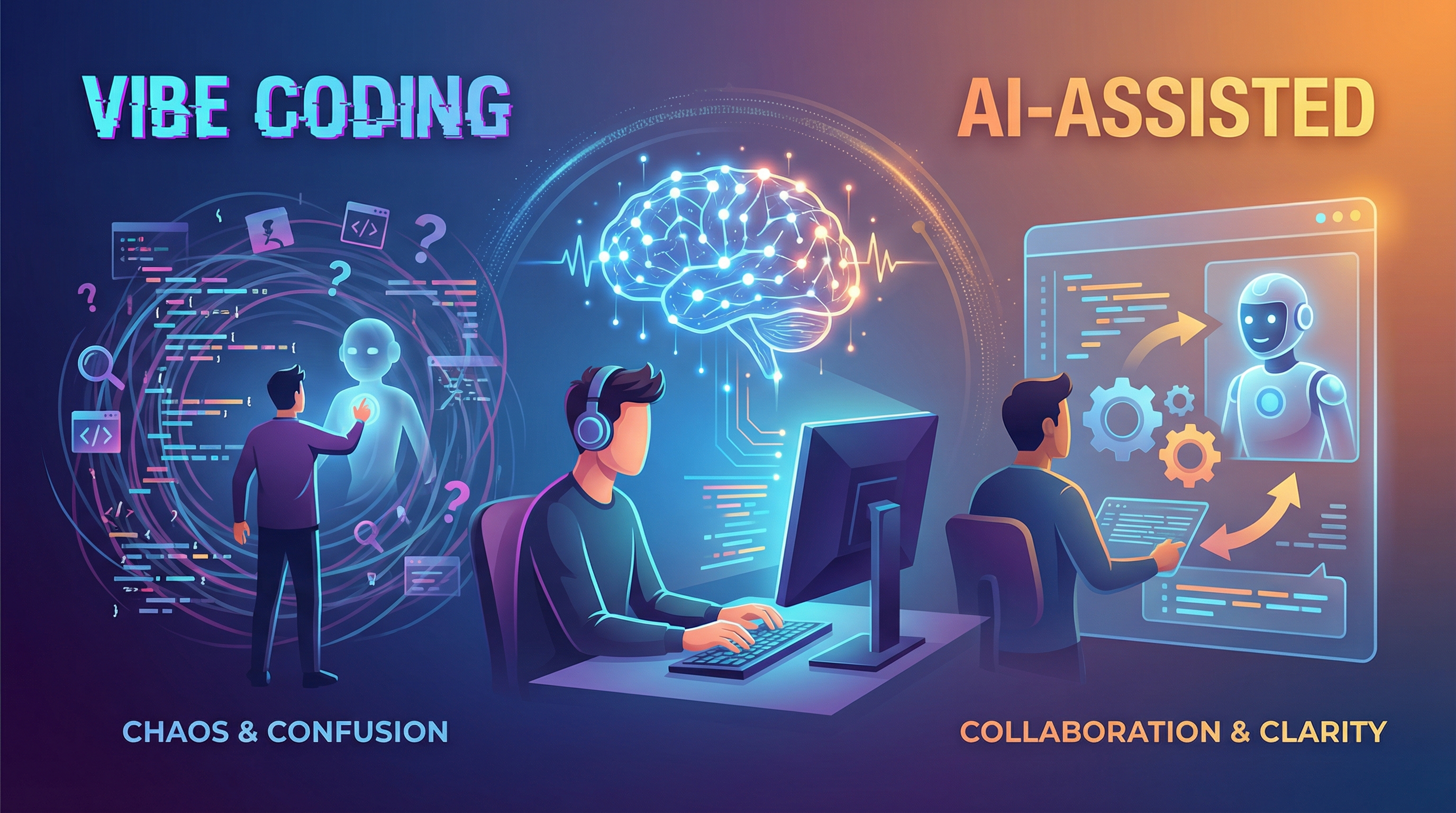
I went to a tech meetup, a Ruby meetup recently, and the big conversation was AI. It seems like it’s on everybody’s mind, whether it’s good for us, whether it’s bad for us, whether it’s bad for the world. But one question that seems to keep coming up is not only are programmers or software engineers worrying about their future, but what does this mean for junior developers? In the past, junior developers took a coding school or they got a CS degree and they went to work somewhere where they had senior developers to mentor them and to teach them and to get them going in this world of programming. Is that going to end? What is the future going to be now for junior developers? Do they even need to go to programming schools? I like to take some of the things we talked about the other night and put them together, and these are my thoughts.
The answers aren’t simple, but I think there’s plenty of reason for optimism if we’re willing to adapt.
The Doomsday Scenario (And Why It’s Overblown)
You’ve probably seen the takes: “AI will replace junior developers” or “Why hire a junior when Claude can write the same code in seconds?” I get why these arguments sound convincing. AI can generate functional code quickly. It can scaffold applications, write tests, and fix bugs. What used to take a junior developer hours can sometimes be done in minutes with the right prompt.
But this view mistakes what junior developers actually do—and what they grow into.
Junior developers aren’t hired to write code. They’re hired to learn how to write code well, to understand systems, to develop judgment, and eventually to become mid-level and senior developers who carry institutional knowledge, make architectural decisions, and mentor the next generation. The code they write today is almost beside the point. The value they provide is their trajectory.
AI doesn’t have a trajectory. It doesn’t grow. It doesn’t develop institutional knowledge. It doesn’t understand your specific business domain, your team’s conventions, or your customers’ needs. These are human qualities that take years to develop, and they’re what ultimately make senior developers valuable.
What Actually Changes
But things do change. The nature of “junior” work shifts when AI can handle more of the mechanical execution. Here’s what I’m actually seeing:
The bottleneck moves upstream. When AI can generate code quickly, the constraint is no longer writing the code—it’s knowing what to build. Junior developers need to become fluent in requirements gathering, problem decomposition, and communicating with stakeholders. These are skills that were always important, but they become even more critical when execution is faster.
Debugging becomes more valuable than writing. Anyone can generate code. Understanding why that code doesn’t work, why it’s slow, why it’s insecure—that requires actual expertise. The developers who thrive will be those who can debug effectively, trace through complex systems, and understand what’s happening under the hood.
The learning curve flattens, but doesn’t disappear. AI can help explain concepts, generate examples, and answer questions instantly. This makes it easier to get started. But the deeper expertise—the intuition, the pattern recognition, the ability to make good architectural decisions—still takes time to develop. The shortcut isn’t to skip the learning; it’s to learn differently.
What Junior Developers Need to Focus On
If you’re early in your career, here’s what I’d encourage you to focus on:
Understanding fundamentals over memorizing syntax. Syntax changes. Frameworks come and go. The fundamentals—how computers process data, how networks work, how databases query—those persist. Focus on understanding why things work, not just how to write the current syntax.
Use AI as a tutor, not a crutch. Ask AI to explain concepts. Ask it to generate examples. Ask it to help you understand error messages. But don’t just paste AI-generated code without understanding it. When you use AI, make sure you’re still learning.
Develop your communication skills. The ability to translate between technical and non-technical people, to write clear documentation, to explain your decisions—these skills become more valuable, not less. AI can generate documentation, but it doesn’t understand your specific context.
Embrace the struggle. It’s tempting to use AI to avoid frustration—to just get the answer rather than figuring it out. But that struggle is where learning happens. Use AI to accelerate your learning, not to bypass it.
A Note on Hiring
From the other side of the table—if you’re hiring or mentoring junior developers, adjust your expectations accordingly. The code a junior produces in their first months might look different than it did a few years ago. They might rely more on AI assistance. That’s okay, as long as they’re learning.
What you should evaluate is their ability to reason about problems, their willingness to learn, and their communication. Can they break down a problem? Can they explain what they’re trying to do? Can they review code and spot issues? These are the skills that matter.
The Long View
I’ve been in this industry for a long time. I’ve seen plenty of “this changes everything” moments. The rise of Ruby on Rails, JavaScript frameworks taking over, cloud computing becoming the default. Each time, people said junior developers would be obsolete. Each time, they weren’t.
What changes is the specific skills that are valuable. The fundamentals remain: thinking systematically, understanding systems, communicating clearly, learning continuously. The developers who thrive will be those who use AI to amplify these human skills, not those who try to compete with AI on its own terms.
The future for junior developers isn’t bleak. It’s different. And honestly, if you’re willing to adapt, it’s a pretty good time to be getting started.